As we move deeper into 2026, the conversation around GLP-1 medications (like Semaglutide and Tirzepatide) has shifted from “how much weight can I lose?” to “how much muscle can I keep?”
Recent clinical data shows that without a targeted nutritional strategy, up to 40% of weight lost on GLP-1s can come from lean muscle mass. To combat this, experts have defined a new “Golden Ratio” for protein intake that prioritizes nutrient density over sheer volume.
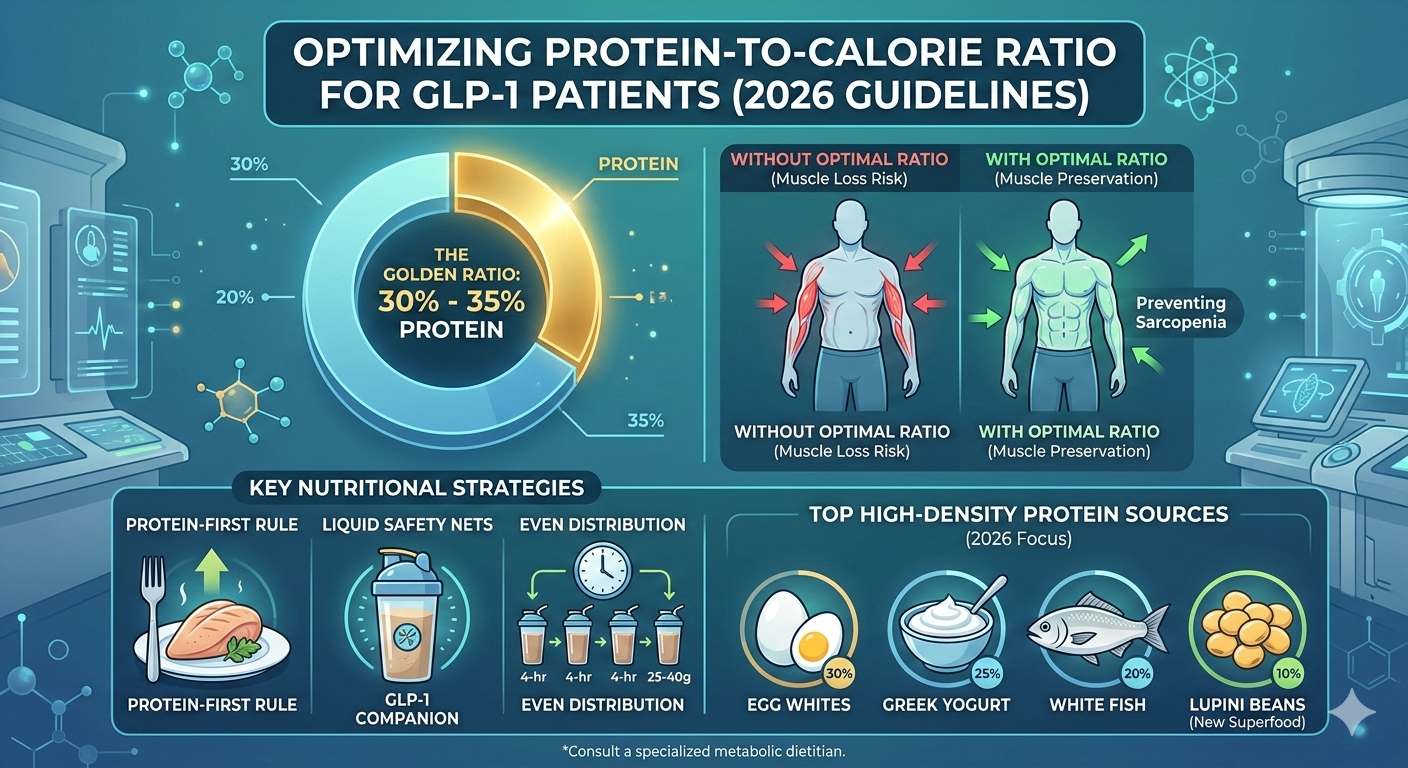
The Golden Ratio: 30% to 35% of Total Calories
In 2026, the medical consensus for GLP-1 patients is no longer just a “high protein” diet. It is a specific protein-to-calorie ratio of 30% to 35%.
Because GLP-1 medications suppress appetite and slow gastric emptying, you are likely consuming significantly fewer calories (often between 1,200 and 1,500 kcal per day). In this reduced-calorie environment, every bite must work harder.
Why the Ratio Matters More Than the Grams
Standard advice often recommends 0.8g of protein per kg of body weight, but for GLP-1 patients, this is dangerously low. To prevent sarcopenia (muscle wasting), 2026 guidelines suggest:
-
Sedentary GLP-1 Users: 1.2g to 1.5g of protein per kg of body weight.
-
Active/Strength Training Users: 1.6g to 2.0g of protein per kg of body weight.
The GLP-1 Protein Target Chart (2026 Estimates)
Use this table to find your target protein intake based on a typical 1,500-calorie GLP-1 weight loss plan.
| Daily Calorie Goal | Protein Ratio (%) | Target Grams (Daily) | Why this works? |
| 1,200 kcal | 35% | 105g | Maximum muscle protection for very low appetites. |
| 1,500 kcal | 30% | 112g | Balanced satiety and energy for moderate activity. |
| 1,800 kcal | 25% | 112g | Higher activity levels requiring more carbs/fats. |
3 Pillars of GLP-1 Muscle Preservation
1. The “Protein-First” Rule
Because of early satiety (feeling full quickly), you must eat your protein source first at every meal. If you fill up on fiber or starches initially, you will likely leave the most vital nutrients on the plate.
2. Liquid “Safety Nets”
By 2026, the supplement industry has pivoted to “GLP-1 Companion” shakes. These are essential because they provide 25-30g of protein in a low-volume liquid format that doesn’t trigger the “overfull” nausea often associated with solid meats.
3. Strategic Leucine Distribution
Research indicates that muscle protein synthesis (MPS) is best triggered by spreading protein evenly. Aim for 25g to 40g of protein every 4 hours rather than one large dinner.
Best High-Density Protein Sources for 2026
To hit a 35% ratio without feeling bloated, focus on these “power” foods:
-
Egg Whites (Pure Protein): Easily added to shakes or oats.
-
Greek Yogurt/Skyr: High protein-to-volume ratio.
-
White Fish & Poultry: Lower fat allows for a higher protein percentage per calorie.
-
Lupini Beans: The 2026 “superfood” with the highest plant-based protein density.
Common FAQs
Q: Can I eat too much protein on Ozempic? A: While rare, the primary risk is constipation, a common GLP-1 side effect. Ensure you pair your high-protein ratio with 25g-30g of fiber and high hydration.
Q: Do I need a GLP-1 specific protein powder? A: Not necessarily, but look for powders with zero added sugars and added digestive enzymes (like protease) to help with the slower digestion speeds of 2026’s newer medications.
Expert Note: Always consult with a registered dietitian specializing in metabolic health before making drastic shifts in your macronutrient ratios, especially when on high-dose GLP-1 or dual-agonist (GIP/GLP-1) therapies.
Leave a Reply